External Static Pressure Calculation Using Calculator
💨 Static Pressure Calculator
Professional ESP Design – PT. Maxiair Indosurya
*Includes a 15% Safety Factor for leakage & unexpected resistance.
What is External Static Pressure
Determining the capacity of an exhaust fan or fresh air fan is not just by calculating the CMH (Airflow), we also have to do the external static pressure calculation or calculating the resistance along the duct channel.
Therefore, we provide you external static pressure calculator.
Why does your ducted AC fail to cool the farthest corners of a room? The secret lies in the External Static Pressure (ESP)! ESP measures the total air resistance across the entire ductwork, grilles, and filters. Miscalculate it, and you will end up with weak airflow, an overworked blower, and skyrocketing electricity bills!
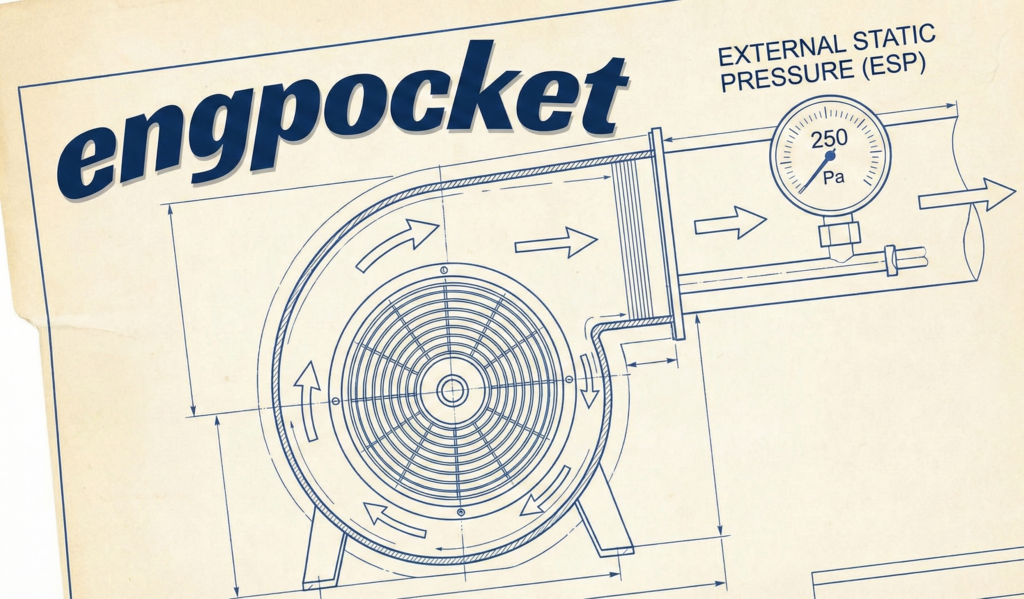
External Static Pressure (ESP) is the amount of pressure a fan must overcome to move air through the external components in the HVAC system, everything outside the unit itself (for examples: duct surface, filters).
So, external static pressure is the pushing power left over after the air has already fought its way through the internal parts of the Aircon unit.
External Static Pressure Formula
Here is the core formula and a calculation guide using the Equal Friction Method, the most widely used approach in HVAC projects.
- ΔPDuct: Friction loss in the straight duct sections.
- ΔPFitting: Dynamic losses from bends and junctions (e.g., Elbows, Tees).
- ΔPAccessories: Pressure drop from installed in-line components (Filters, Dampers, Grilles/Diffusers, Cooling Coils).
Case Examples
Standard Pressure Drop Reference Calculator (SMACNA/ASHRAE Guidelines)
What is a pressure drop?
Pressure drops (also known as pressure loss) is essentially the “tax” that air or fluid has to pay as it moves through our system.
Technically, it is the reduction in static pressure as air flows through a duct, pipe, or other component. Think of it as friction and resistance fighting against the force of the fan or pump.
Why Should Engineers Care About Pressure Drop?
- Accurate Fan Selection (ESP)
- Energy Efficiency & Noise
- Air Balancing
Pro Tip: When designing, always aim for the lowest practical pressure drop.
Engpocket friends can use the calculator below as a cheat sheet to find out the pressure drop in your system.
HVAC Static Pressure Loss Calculator
1. Select Fitting Type:
2. Straight Ducting (per meter):
3. Filters (Initial Drop):
Total Estimated Pressure Drop: